With the Raise3D Pro2 behind the scenes, we deliver parts that go beyond "look-good prototypes" - they perform. The Pro2 features a dual-extruder system, 300 mm build height (305 × 305 × 300 mm) and a heated aluminium build plate capable of 110 °C.
It handles advanced materials - PLA, ABS, PETG, Nylon, carbon-fibre and glass-fibre infused filaments - so we can produce parts that are structurally robust, dimensionally accurate and ready for real-world use.
Consistent Quality & Reliable Delivery
Our Pro2 machine uses a full-metal frame, precision motion system, and high repeatability (<0.005 mm) so each part meets the same exacting standards.
For you this means reliable batches, predictable lead-times and fewer surprises - your customers receive parts they can trust every time.

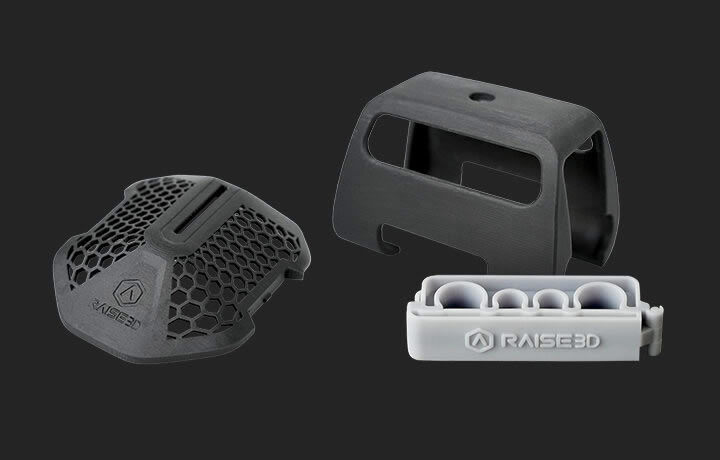
Versatility in Design, Materials & Finish
Because the Pro2 supports interchangeable nozzles (0.2 / 0.4 / 0.6 / 0.8 / 1.0 mm) and a wide range of materials (including specialty filaments), we can tailor parts exactly to your needs:
- Thin-wall, high-detail components (using 0.2 mm nozzle)
- Large, functional parts (using wider nozzles and stronger materials)
- Multi-material jobs (dual-extrusion enables support materials or multi-colour/functional builds)
Efficiency & Workflow Built for Production
We're equipped to handle low-volume production runs or rapid turnarounds. The Pro2 supports print recovery after power-outages, filament run-out detection and remote monitoring — so jobs stay on schedule.
For you, that translates into faster time-to-market, fewer delays, and confidence that deliveries will hit agreed deadlines.
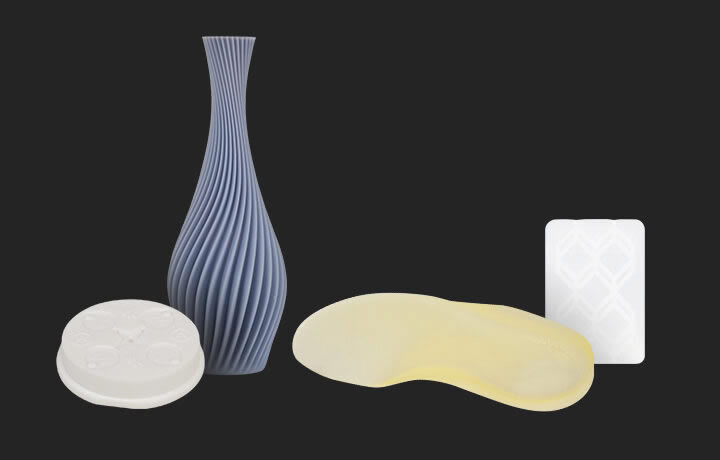
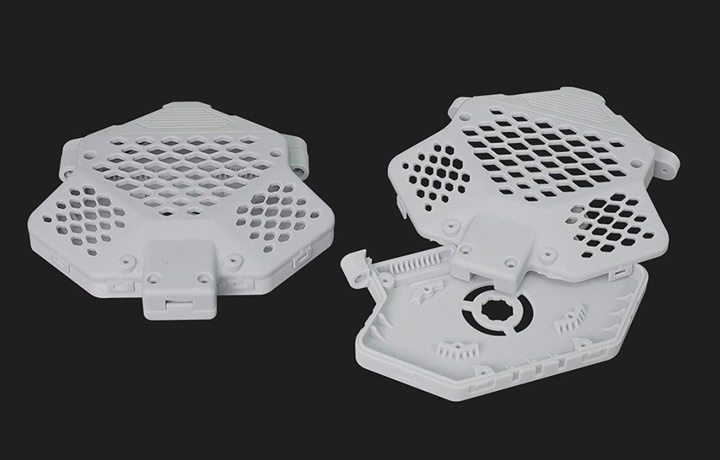
End-use Components, Not Just Mock-ups
The combination of build volume, material breadth, precision and reliability means we can create parts that are fit for purpose in final assemblies, tooling applications or customer-facing deliverables - not just "show-models".
This means your customers receive products that truly perform, reinforcing your brand's promise of quality and durability.
Why This Matters to Your Customer
- Better quality: Tight tolerances, crisp features, materials that match performance requirements.
- Faster turnaround: With production-capable machines, you can supply usable parts more quickly than traditional methods.
- Greater design freedom: Complex geometries, integrated features, multi-material options — enabling designs that wouldn't be feasible via traditional manufacturing.
- Reduced risk: Reproducible results, solid workflow, and manufacturing-grade equipment reduce the chances of part failure or variability.
- Cost-efficient small batches: No tooling required; economically viable for prototypes, pilot runs or niche custom parts.